Monday, 22 March 2010

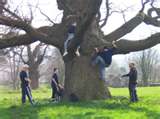
Climbing trees can be a lot of fun


I'm sure we have all climbed a tree some time or other in our childhood. The excitement of being high above the ground, the feeling of the breathtaking view from the top, the risk of the height... But some people have gone much further and have ended up making a hobby, even a sport out of this 'childish activity'. Competitive tree climbing for adults is becoming popular across the world and nowadays there are even tree climbing championships.
The BBC has dedicated a couple of their programmes "6 Minute English" to tree climbing. In session 1 you will learn a lot of new vocabulary about the world of trees. In session 2 you will find out about the tallest and oldest trees in the world and also about what is like to spend the night up on a tree.
Give it a go (I mean to the listening, not the climbing), you'll enjoy yourself very much. (Remember you can download the transcripts if you have any difficulties understanding the recordings).

Saturday, 20 March 2010

Spring is here again


Spring is just round the corner... when does spring officially start this year?
One of the annual consequences of the arrival of spring is the changing of time, the so called Summer Daylight Saving. Every year, the last Sunday in March we set our clocks one hour forward, remember: "Spring forward, fall back." So in spring, an hour forward, in autumn or fall we go an hour back. Pay a visit to this pretty website to find more information.
Listen to this podcast explaining the origins of the tradition. Is everybody happy with this decision? What did the Romans use to do way back in the old times? Here you can read the transcript of the recording if you have any doubts.
After listening to the podcast watch this BBC video about the possibility of having BST (British Summer Time) all year round, is it a popular idea?
Why not share with us what spring means to you?

Tuesday, 16 March 2010

Saint Patrick's Day


On March 17th Irish people all over the world celebrate St Patrick's Day (Patron Saint of Ireland). Here you can find information about St Patrick's Day 2010.
Our dear friend Ana, from Estepona, has sent us a PPS with plenty of interesting things about this special day. Enjoy it.
And of course a video, this time recommended by our colleague Tim, a true Irishman. Hard to follow? Have a look at the lyrics here. Don't forget to pay a visit to Tim's blog where you'll find the "real Irish thing". (Thanks Tim. Happy St Patrick's Day! We'll miss last year's concert!)


Tuesday, 9 March 2010

The prodigal son


Definitely one of the most beautiful passages I've ever read. The compassionate love of a father towards his lost son. The parable of the prodigal son breaks through time and religions. A breathtaking story of forgiveness in this modern world which makes us pay for every single mistake we make.
If you want to analyze this writing in depth click here.

Saturday, 6 March 2010

International Women's Day 2010


International Women's Day is celebrated on March 8th. Visit the official website for this annual event and read about the programme for this year 2010.
This link will take you to the Message from Irina Bokova, Director-General of UNESCO on the occasion of International Women's Day.
In the video below you will find some impressive facts about the importance of women's role in the world today.
What do you think about this celebration? Post a comment with your opinion. What does WFP stand for? Do you know about their activities?


Tuesday, 2 March 2010

The Press


I found this really interesting website from where you can have access to nearly any newspaper in the world. You can try different English speaking countries (Spanish papers too).
We know reading newspapers in a foreign language can be quite difficult, but why not give it a try? You can browse through one of them and maybe find an article worthwhile sharing with classmates. Come on! Have a go!

Saturday, 27 February 2010

Special restaurant

Where is the strangest place you've ever eaten a meal?
A new restaurant has opened in Britain. Find out what is so special about it. What's the name of the restaurant? Can anyone visit it? Who are the waiters and chefs working there? Do you think you would like to have dinner at this new restaurant? Leave a comment after listening to this interesting BBC recording.

Thursday, 25 February 2010

Quantifiers


What are quantifiers?
Like articles, quantifiers are words that precede and modify nouns. They tell us how many or how much. Selecting the correct quantifier depends on the distinction between Count and Non-Count Nouns. See a representative list of quantifiers.
Click here to read a bit more about quantifiers and do some exercises.
And a quick video


Monday, 22 February 2010

Practise your English with lyrics


I've just learnt about a new website Lyricstraining.com where you can practise your English using song lyrics. It's interactive and quite amusing. You can choose the level of difficulty too. Have a go at it, I'm sure you'll enjoy it. Make sure you read the instructions (help) before you use it. Choose your level and go. Click here to try an example.

Sunday, 21 February 2010

No, no regrets


To express regret means to feel sorry or repentant about something you have done that you wish you had not done or you shouldn't have done or about something you haven't done that you now feel you should/could have done. I guess we all have things we regret if we look back in our lives, don't we?
We can see examples of regret in a context in this beautiful song by Elvis Presley: "Always on my mind".

Sunday, 14 February 2010

Chinese New Year's Day


Apart from St Valentine's day, February 14th 2010 is the first day of the Chinese new year, the year of the Tiger. The Chinese New Year day is always the second new moon after the winter solstice and therefore it changes from one year to another.
According to Chinese tradition, parents give their children clean, fresh banknotes at the start of the new year in order to bring them good luck. What happens when there is shortage of new bank notes or they are difficult to find?... it's time for a new business opportunity... read more here.

Friday, 12 February 2010

For pizza lovers


How much of a pizza lover are you? I just came across this report on Naples pizza. It's good news for pizza lovers. Have a look at it. You can read the report, listen to it and check the vocabulary. Nice and short exercise. Don't miss it!
Leave a comment on the blog about your favourite kind of restaurant when you eat out.

Thursday, 11 February 2010

Places where people live


If you could choose would you prefer to live in a penthouse in fifth avenue, NY or in a picturesque cottage in the English countryside? Throughout history people have lived in many places, some more comfortable, luxurious or expensive than others. Here you have a nice exercise about places where people live and adjectives that you could use to describe those places. Have a go at it and send your teacher a short composition explaining where you would choose to live if you could and why.

Wednesday, 10 February 2010

Saint Valentine's Day


Saint Valentine's Day is celebrated on 14 February, but how much do you know about the origin of this celebration? You can read and answer the questions about this text.
Feb 14 can be a wonderful day to fall in love -why not?, or at least to try. If you don't happen to be an expert, here you are given a few hints to help you to say 'I love you' with a guarantee of success. (Don't take it too seriously).
I found this cute song and I'm sure our classmate Juana Mari will love it.


Saturday, 6 February 2010

Conditional clauses. Type II


Today we'll have a look at Conditional Clauses Type II, the so-called hypothetical conditions, because:
  • a. we don't expect the action in the if-clause to take place Ex: "If all the wars stopped, the world would be a much better place to live in." (unlikely to happen?)
  • b. the supposition in the if-clause is contrary to known facts or very unlikely to happen. Ex: "If I could fly I wouldn't have to spend money on buses." (contrary to known facts -people don't fly).
Type II conditionals are mainly used to make hypothesis, express wishes and give advice. Again, for more information on grammar and usage of this type of conditional sentences read these notes and visit this tutorial.
A couple of other useful links to conditional exercises: Type II, grammar 4U on line.
And, as usual, I have a song for you. Let's go back to the sixties with Peter, Paul and Mary's "If I had a hammer" (lyrics)